The Importance of Website Traffic: Key Metrics and Small Details That Make a Big Impact
Website traffic is one of the clearest “signals” your business receives from the market. In the simplest sense, traffic is proof of visibility. This comes from search, social, partnerships, or brand recognition.
But traffic only becomes valuable when you connect it to outcomes. A pageview doesn’t pay the bills; a qualified visitor who takes a meaningful action (requesting a demo, booking a call, buying a product, subscribing, applying, donating) does. That’s why “traffic” and “performance” can’t live in separate conversations. The real win is turning the right traffic into measurable growth.
At Media Genesis, traffic strategy sits at the intersection of creative, engineering, and measurement. Our work spans website design and development, digital marketing, and analytics + SEO/SEM, because the best traffic outcomes happen when the site experience and the traffic engines are built to support each other.
Why understanding website traffic is crucial?
Traffic is not “good” or “bad” by itself. It’s dependent on context. Ten thousand sessions can be a win for a brand awareness push, a disappointment for an eCommerce launch, or a red flag if it’s mostly bot noise hammering a form. The difference is intent, and intent usually shows up in the source of traffic and the behavior after the click. In practice, understand the page type:
- A service page should create confidence and drive inquiries.
- A product page should reduce friction and close sales.
- A blog post should build trust, answer questions, and guide visitors deeper into your site.
- A careers page should attract qualified applicants, not just casual browsers.
Those outcomes require measurement that’s aligned with the business. In Google Analytic 4 (GA4) terms, that means defining and tracking the “key events” that matter most.
Difference between direct, social, organic, and referral traffic
Most organizations have traffic but misread what it’s telling them because they don’t understand (or can’t trust) the channel mix. In Google Analytics, channels are rule-based definitions that classify how users arrive (e.g., Direct, Organic Search, Organic Social, Referral, Email). A few channel definitions matter a lot when you’re diagnosing performance:
Organic Search tends to be “demand capture.” Someone is actively looking for answers, solutions, comparisons, or a vendor. SEO is how you earn that visibility over time.
Organic Social is usually “demand creation + distribution.” You’re earning attention inside feeds and then inviting people to learn more on your site.
Referral often reflects brand credibility. It’s traffic from other sites linking to you—partners, directories, news, blogs, associations, and more. It can also identify where your reputation is being built (or where you’re being misunderstood).
Direct is where things get tricky. Google defines Direct as users arriving via a saved link or entering your URL. However, GA4 can also classify traffic as “(direct) / (none)” when it can’t identify the origin. For instance, clicks from offline documents (PDFs, Word files) or when ad blockers interfere with tracking cookies used to identify traffic origin.
That last point is why “Direct is up” can mean two totally different things:
- Good news: your brand is strong (people remember you, return, and type you in).
- Not-so-good news: attribution is breaking (traffic is getting mislabeled because tracking is missing or blocked).
As an agency, we treat traffic-source clarity as foundational. If you can’t trust your channel data, every marketing decision becomes harder, and every ROI conversation becomes fuzzy.
Key metrics to monitor
Most teams track “sessions” and call it a day. The better approach is to track a small set of metrics that explain three things:
- Are we attracting the right people?
- Are they engaging with what they find?
- Are they taking meaningful actions?
GA4 is built around engagement and events, so the most reliable performance conversations usually combine channel data (where users came from) with engagement and key events (what they did).
Bounce rate and engagement rate
GA4 reframed bounce rate in a way that’s more diagnostic. In Google’s definition, engagement rate is the percentage of engaged sessions, and bounce rate is the percentage of sessions that were not engaged (i.e., it’s the opposite of engagement rate). Google defines an engaged session as one that lasts longer than 10 seconds, has a key event, or has at least 2 pageviews/screenviews.
What a high bounce rate might mean:
- The page didn’t match the promise of the click (misaligned keyword intent, misleading headline, wrong audience).
- The page loads slowly or feels frustrating, so users leave before engaging. Page experience and Core Web Vitals are explicitly positioned as important for overall success in Search and user experience.
- The content answers the question instantly (which can be fine). A single-page session isn’t automatically “bad,” especially for blog content that satisfies intent quickly; what matters is whether that traffic is supporting your goals.
Conversion rate and key event rate
A key event in GA4 is an event that measures an action particularly important to the success of your business and it’s surfaced in reports once configured. This is where many organizations accidentally sabotage their own reporting:
- They track traffic, but not the actions that define success.
- Or they mark the wrong thing (e.g., trying to mark every page view as a conversion).
- Google explicitly notes that while the page_view event tells you when someone lands on a page, you can’t simply mark page_view as a key event because then all pageviews would count as key events.
At Media Genesis, we approach conversions with a hierarchy:
- Primary conversions (sales / leads / applications / bookings).
- Micro-conversions (newsletter signups, video engagement, key downloads, “contact us” intent signals).
- Quality signals (which conversions came from which channels and which content paths).
Referral traffic quality
Referral traffic is often an underused advantage. Google’s default channel grouping defines Referral as users arriving via non-ad links on other sites/apps (like blogs and news sites). This traffic is one of the quickest ways to understand how credibility is building around your brand, because it reflects someone else choosing to cite, recommend, list, or discuss you. At the same time, it can uncover messy attribution issues (e.g., payment gateways, third-party tools, or cross-domain journeys) that should be cleaned up so reporting stays trustworthy.
Small code that impacts your site
This is where “small details” start making surprisingly big impacts, because code-level choices affect crawlability, measurement accuracy, friction, and trust.
reCAPTCHA
Google’s reCAPTCHA is designed to protect sites from spam and abuse, using risk analysis to distinguish humans from bots. Verification steps can add friction. CAPTCHAs can create major usability problems and harm conversions, especially when users get challenges wrong and abandon flows.
Two practical, user-first notes:
- If you need protection but want less friction, Google describes reCAPTCHA v3 as score-based “without user friction,” because it runs in the background and returns a score for each request.
- The W3C has documented alternative anti-spam methods and notes that accessible human verification is hard to get right. Teams should consider alternatives like honeypots, progressive controls, and layered defenses rather than defaulting to challenges everywhere.
At Media Genesis, we treat reCAPTCHA as a scalpel, not a hammer. We use it where risk is real (forms, logins, account creation), and avoid adding it where it creates unnecessary drop-off.
Hyperlinking, internal linking, and SEO crawlability
Google explicitly states that it uses links to determine relevancy and to find new pages to crawl. This matters at the code level. Google emphasizes that, generally, it can only crawl a link reliably if it’s an <a> element with an href attribute. The strategic best practice is to link in ways that help a user naturally move from: problem → explanation → proof → action and help search engines understand how your pages relate. Google also calls out anchor text (link text) as meaningful, because it helps people and Google make sense of the destination page.
Backlinks and “domain authority” in plain English
Backlinks matter because links act as signals and discovery mechanisms in Search. But not all links are safe, and not all links are equal. Google’s spam policies define link spam as creating links to or from a site primarily to manipulate search rankings. Examples include buying/selling links for ranking, excessive link exchanges, and using automated programs/services to create links.
Google also clarifies that buying/selling links for advertising/sponsorship isn’t inherently a policy violation if outbound links are properly qualified (e.g., using rel=”nofollow” or rel=”sponsored”).
Domain Authority (DA) is a third-party metric (commonly associated with Moz) intended to estimate ranking potential; reputable industry commentary stresses it is not a Google ranking factor and shouldn’t be treated as one. So why talk about it at all? Because even though DA isn’t used by Google, it can still be a directional proxy when evaluating link opportunities if you treat it like a comparative indicator.
Keywords and “small SEO details” that move rankings
Keywords still matter, but not in the outdated, “stuff it everywhere” way. Google’s own explanation of ranking results says the most basic relevance signal is when content contains the same keywords as a user’s query (including keywords in headings and body text). Google Search Essentials also recommends using words people would use to look for your content, placing them in prominent locations like the title and main heading, and using descriptive locations like link text.
At the same time, keyword stuffing is explicitly called out as a spam practice in Google’s spam policies. One surprisingly important “mini detail” is avoiding wasted effort on outdated tactics. Google has explicitly stated it does not use the keywords meta tag in web search ranking.
So the modern keyword approach is:
- match real search intent
- write for humans first
- use clear, descriptive language in the places that matter (titles, headings, link text)
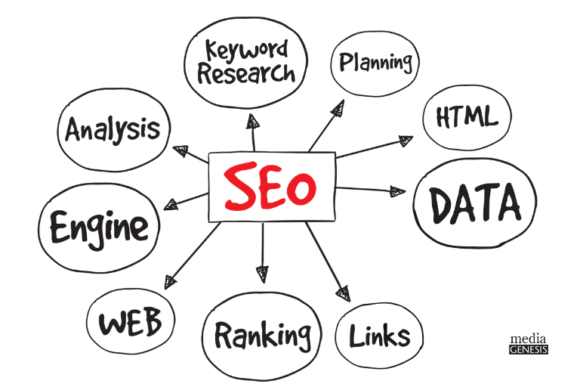
SEO fundamentals that still win in 2026
Google frames Search visibility through three core steps: crawling, indexing, and serving relevant results. If crawling and indexing don’t work cleanly, even great content can underperform. From there, content that performs well tends to align with Google’s direction on “helpful, reliable, people-first content,” rather than content created primarily to manipulate rankings.
Long-tail keywords and high-intent visibility
Long-tail keywords are typically more specific queries (often lower volume individually, but high intent). A widely referenced SEO definition from Ahrefs describes long-tail keywords as search queries that tend to be longer and more specific than “head” terms. Long-tail strategy is one of the most reliable ways to grow organic traffic and improve conversion quality at the same time. The content is built to answer specific questions people are actually asking (and those people are often closer to taking action).
Google’s people-first content guidance is essentially a framework for creating content that satisfies users rather than chasing algorithms. Pair that with strong internal linking (so visitors don’t hit dead ends) and you create compounding benefits, such as better engagement, clearer topical structure, and stronger navigation paths.
Backlinks and partnerships are still critical in competitive spaces, but only when they’re earned and compliant. Google’s own documentation confirms links help Google find pages and assess relevance, and its spam policies make it equally clear that manipulative link practices can trigger demotion.
- partnerships where linking makes sense for the reader
- resource pages where you belong
- citations in industry content
- PR coverage driven by real work
- thought leadership that other people choose to reference
Leveraging social and direct traffic
Organic traffic growth is powerful, but most modern brands win by diversifying. When you post on LinkedIn, Instagram, or Facebook, you’re often asking people to leave a platform and take a next step—read, watch, subscribe, compare, contact. In GA4’s channel definitions, Organic Social is driven by non-ad links on social sites, while Paid Social reflects ads on social sites.
The “small detail that matters” is making social traffic measurable and comparable to other channels. That’s where UTM tagging becomes non-negotiable. Google’s Analytics help documentation explains that adding utm campaign parameters to destination URLs lets you see which campaigns refer traffic, and those parameter values appear in reports like the Traffic acquisition report.
Direct traffic is the closest thing you have to “brand gravity” people returning because they already know you. Google defines Direct as people arriving via saved link or entering your URL.
If you’re doing email marketing but see unusually high “Direct,” it can be a cue that links aren’t consistently tagged or attribution is being lost.
This is also where brand and content reinforce each other:
- social creates interest
- email nurtures and drives return visits
- direct reflects loyalty and recurring demand
- organic captures high-intent discovery
How Media Genesis turns traffic into measurable growth
The best traffic strategy is built like a system: a clear story, a strong website foundation, and measurement you can trust. Our services span website design + development, digital marketing, and analytics & SEO/SEM. A process that starts with analysis and ends with continuous improvement.
Operationally, we emphasize measurement transparency and tool ecosystems. Our own marketing tools overview highlights data transparency, customized real-time dashboards, and experience managing campaigns (including using tools like Google Ads and Google Tag Manager for conversion tracking).
That’s not “extra.” It’s what makes traffic strategy accountable:
- improved traffic should show up in acquisition reporting
- improved engagement should show up in engagement metrics
- improved outcomes should show up as key events that stakeholders agree are meaningful
When you track it correctly and interpret it honestly, traffic reveals:
- where your brand is visible
- what messages are working
- what content earns trust
- which details are bleeding conversions
- where your next improvements should come from
That is why the “small details” (link code, keyword placement, anti-spam friction, UTM discipline, page experience) matter so much. They all quietly shape whether traffic turns into business value.
Our Related Work
Driving Digital Transformation for Colson Group USA

.png)